|
||||||||||||||||
|















|
|
|
|
||||
 |
|||||||
|
The Salamanders and the Pyre Wardens The Salamanders, XVIII Legion of the Legiones Astartes, are defined as much by their mastery of the forge as by their conduct in war. Forged in the harsh volcanic crucibles of Nocturne and guided by the will of their Primarch, Vulkan, they embody resilience, craftsmanship, and a measured application of destructive force. To the Salamanders, war is not an act of wanton annihilation, but a discipline—each weapon a tool, each strike a deliberate act.
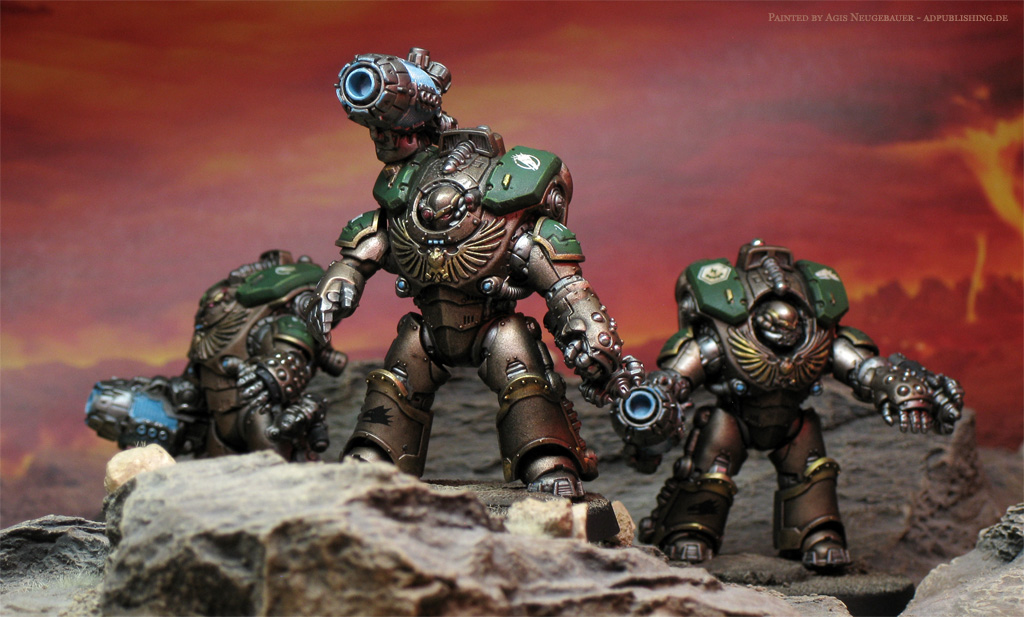
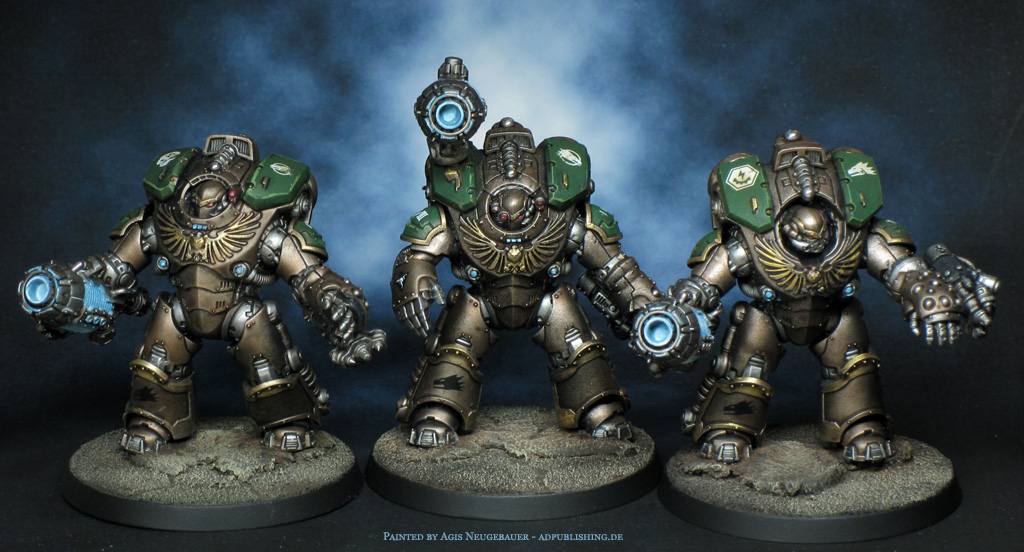
The Pyre Wardens are a specialised sub-sect of the Legion’s forge tradition, operating at the intersection of innovation and battlefield necessity. Tasked with the development, testing, and refinement of advanced wargear under live combat conditions, they serve as both artificers and evaluators of experimental designs. Their cadres are frequently deployed alongside frontline forces, where prototype weapons and armour patterns are subjected to the ultimate trial: war itself. Though their work carries inherent risks - unstable systems, unproven configurations, and the ever-present danger of catastrophic failure—the contributions of the Pyre Wardens have echoed across the Legion. Many of the Salamanders’ most distinctive wargear patterns trace their origins to these trials by fire. In the hands of the Pyre Wardens, the forge is never still. It burns, adapts, and evolves—just as the Salamanders themselves.
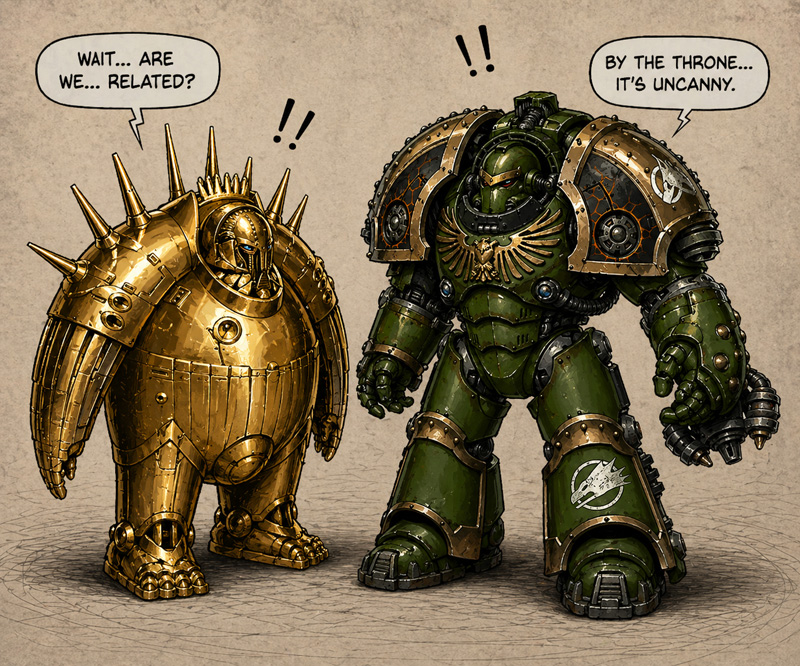
I’ve always liked the idea behind the Saturnine Terminators. They feel ancient, brutal, and completely over-engineered in a very “Horus Heresy” way. At the same time, though, something about the design never quite worked for me. The massive domed shoulder plates are iconic, but they also push the silhouette into a direction that feels… a bit too bulky and almost unintentionally goofy. At one point I realized they actually reminded me of the Mondoshawan from The Fifth Element—which I couldn’t unsee after that.
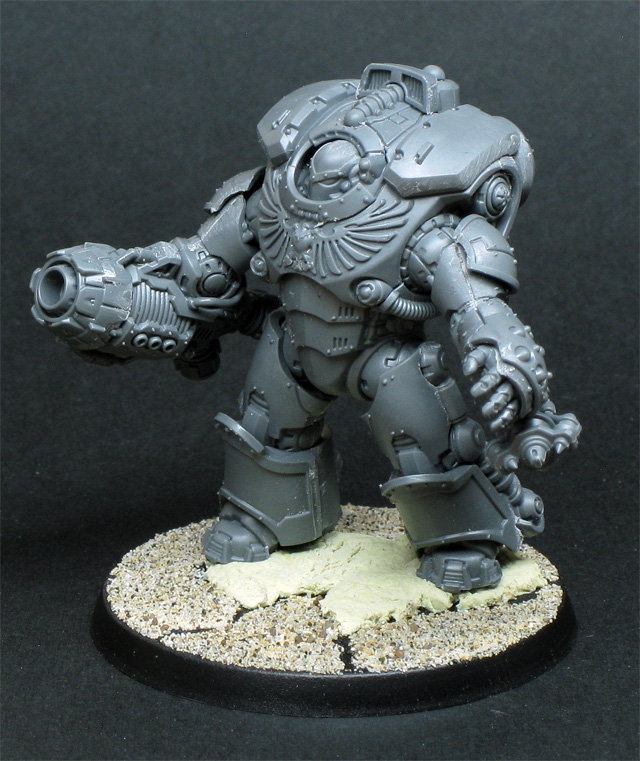
Still, I liked the core concept enough to start building a few models anyway. During assembly, I left the shoulder domes off temporarily—and that’s when it clicked. Without them, the whole model changed. The proportions felt more grounded, the silhouette more aggressive and readable. It still had all the weight and presence of a Saturnine suit, but looked less like a walking relic and more like an actual war machine.
At that point the idea really started to take shape. I didn’t just want it to be a visual tweak—I wanted a reason for it to exist. That’s when I came across the Pyre Wardens in Journal Tactica: The Forges of Saturn. The idea of a Salamanders sub-group focused on experimental wargear fit perfectly. From there, everything came together quite naturally:
So the Ashfall Saturnine Cadre basically grew out of a simple observation during building:
Disclaimer All photographs featured on this website are © Agis Neugebauer. Personal Note on AI Usage The use of AI tools in this project has been a highly engaging and creativity-enhancing experience for me, opening up new ways to explore my ideas, concepts, and visual design.
|
|||||||